Relationships are at the heart of family businesses. As the years go by, these connections shape the company’s history, values, reputation, and how it operates. While this bond is a major strength, it can also make leadership changes more challenging.
Picking the next leader is more than just filling a position. Founders may be focused on the legacy they’ve built, family members might have their own hopes for future roles, longtime employees may worry about changes, and the next generation often has new ideas for the business.
Recent research shows just how big this challenge is. Deloitte’s 2026 study found that 27% of families and 40% of family businesses are either going through succession now or expect to within the next ten years. The main hurdles include whether the next generation is ready, finding the right successor, and current leaders being hesitant to step down.
Knowing why these transitions are tough is the first step to managing them well.
The Business and the Family Are Deeply Connected
In most organizations, leadership roles, ownership, and family relationships exist separately. In a family business, one person may occupy several of those roles at once.
A father may be the CEO, majority owner, and parent of two potential successors. A sibling may be an owner without working in the business. Another family member may hold an executive position while owning relatively little equity.
When leadership changes, all these relationships can shift.
Questions about who should lead often turn into debates about fairness, recognition, inheritance, and family history. Choices that seem logical for the business can have emotional effects at home.
That’s why it helps for family businesses to clearly separate family, ownership, governance, and management roles. PwC points out that defining these responsibilities is key to keeping things stable during succession.
Founders Can Have Difficulty Letting Go
For many founders, the business is the result of years of hard work and sacrifice. Their sense of identity is often tied to the company they built.
So, stepping away is often harder than just picking a retirement date.
Deloitte’s 2026 research found that 32% of respondents identified reluctance from current leadership to relinquish control as a significant barrier to successful succession.
A founder might truly want the next generation to take over, but still want to make decisions, talk directly to employees, or step in if they disagree with the new leader. This can leave the successor responsible for the business but without real authority.
A good succession plan should pay as much attention to the founder’s future role as it does to the successor’s.
Will the founder remain on the board? Serve as an advisor? Maintain certain relationships? Leave daily operations completely?
Setting these boundaries before the transition helps avoid confusion later.
Being Family Does Not Automatically Mean Being Ready
Family businesses often feel strong pressure to keep leadership in the family. But just because a family member wants the job doesn’t mean they’re ready for it.
Future leaders often need experience managing teams, handling finances, making tough personnel choices, shaping strategy, working outside the family business, or leading during uncertain times.
According to Deloitte, insufficient qualifications or experience among the next generation was the most frequently cited barrier to successful succession in its recent global research, identified by 35% of respondents. Difficulty identifying a suitable successor followed closely at 33%.
Getting someone ready for leadership should start long before a transition is planned. Development plans, mentoring, giving more responsibility, and honest assessments can show if a potential successor is truly prepared.
Families should also be open to the idea that the best next leader might not be a family member. Deloitte found that the number of family businesses planning to hire a non-family CEO after succession is expected to grow from 13% to 26%.
Different Generations May Have Different Visions
A founder might want to keep the business much as it is now. The next generation could see chances to bring in new technology, enter new markets, change operations, or update how employees work.
Neither viewpoint should win out just because of age or tradition.
Families need to have real conversations about the future of the business before choosing who is best to lead it.
This issue is becoming increasingly important as technology reshapes organizations. Deloitte found that next-generation family business leaders are placing considerable emphasis on technology modernization, artificial intelligence, new products and services, and geographic expansion.
These ambitions can lead to good growth opportunities, but they can also cause tension if the current generation feels change threatens what made the business work.
A shared vision gives the new leader more than just permission to take charge. It offers clear direction for the future.
Family Dynamics Can Make Difficult Conversations Even Harder
Succession means having talks that many families would prefer to skip.
Who is qualified to lead?
Who isn’t?
What happens if two siblings want the position?
What happens if no one does?
How will ownership be divided?
How should family members who work in the business be treated differently from those who don’t?
What happens when someone believes the process is unfair?
Avoiding these talks might keep the peace for now, but unanswered questions usually get harder as the transition approaches.
Setting up governance structures can help. Having a board with independent members, a family council, clear decision-making processes, and well-defined expectations can bring structure and fairness to conversations that might otherwise get very personal.
PwC’s 2025 Family Business Survey emphasizes the importance of governance and clearly defined decision rights during leadership transitions, particularly as family businesses navigate increasingly complex strategic decisions.
Longtime Employees Are Part of the Transition, Too
Succession affects more than just family members.
Employees who have worked with a founder for many years often feel strong loyalty. They may worry if the new leader understands the company’s culture, respects its history, or plans big changes.
Non-family executives might also wonder about their future, especially if they think a family member got the top job mainly because of their last name. succession process is communicated matters.
Employees need to know why the change is happening, how the new leader was prepared, what will stay the same, and where the company is going. Leaders should also give employees chances to ask questions and get to know the new leader.
Trust that took years to build can’t just be handed over with a new title.
Succession Planning Often Starts Too Late
One of the easiest problems to avoid is waiting too long.
A Deloitte survey of U.S. family business executives published in February 2026 found that 85% considered strategic CEO succession planning critical to long-term success, yet only 57% had established a plan and just 23% were actively implementing one. Thirty percent acknowledged that their succession planning was already behind schedule.
Succession planning should start years before you expect a transition. This gives the company time to develop future leaders, share important knowledge, set up governance, talk with employees, sort out ownership, and decide what the outgoing leader’s role will be.
It also gives the family something very valuable: options.
When succession begins because a leader suddenly becomes ill, retires, or can no longer continue in the role, choices become much more limited.
Preparing the Family and the Business for What Comes Next
Succession in a family business is about much more than picking the next CEO.
The best transitions consider the needs of the business, family relationships, how ready future leaders are, what employees expect, and the legacy the current generation wants to leave.
This means having some tough conversations. It also means setting up clear governance, honest evaluations, leadership training, and giving everyone enough time to get ready.
At WhiteWater Consulting, we work with family-owned and closely held businesses to develop succession strategies that address leadership readiness, organizational continuity, communication, and the realities that come with transitioning a business from one generation to the next.
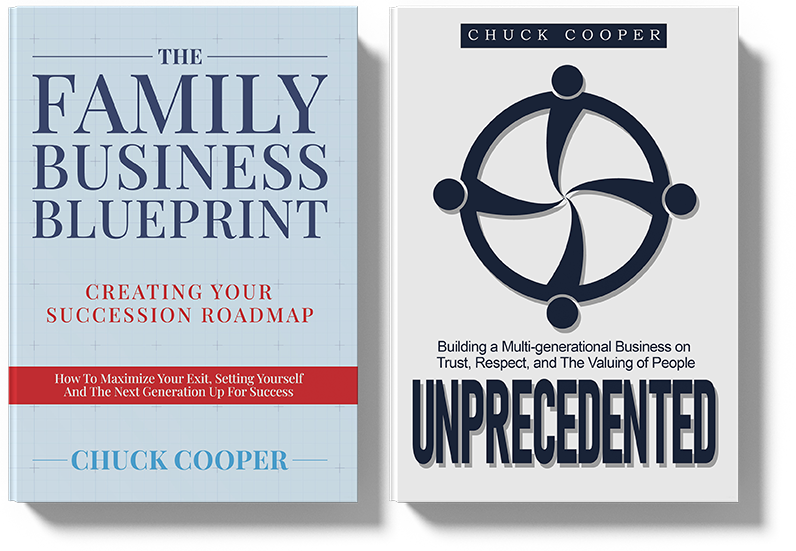
If your family business is starting to talk about the future, now is the time to turn those talks into a real plan. Contact WhiteWater Consulting to set up a meeting with Chuck Cooper and start building a succession strategy that protects your business, your people, and your family’s legacy.